
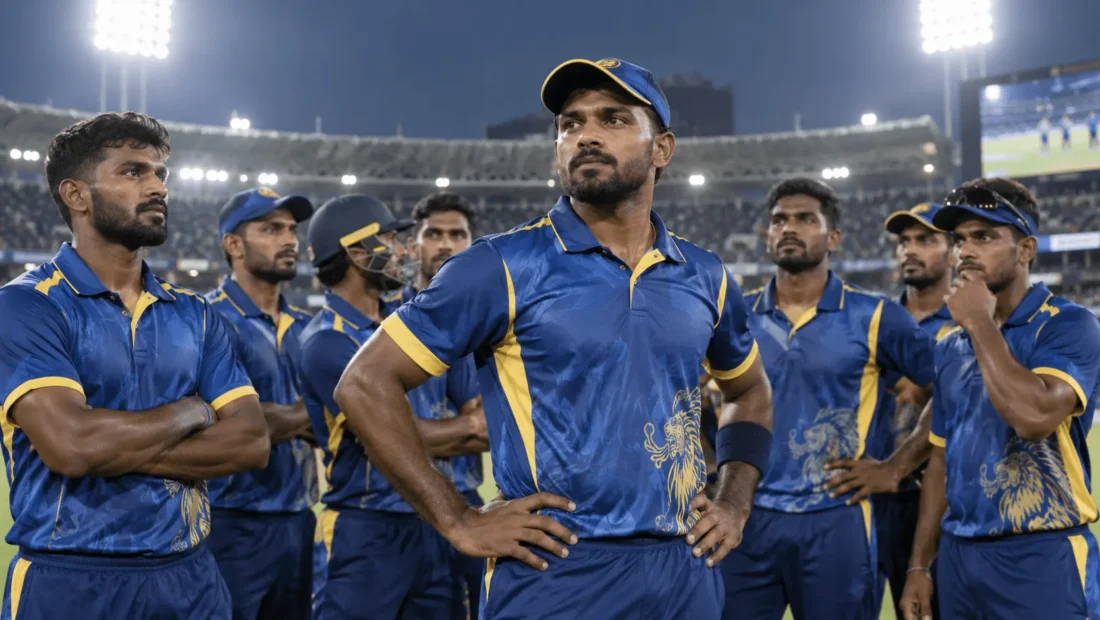
Sri Lanka have recalled Niroshan Dickwella and Ashen Bandara for the men’s cricket competition at the 2026 Asian Games, while also giving four players their first T20I call-ups. The 15-player squad will be captained by Sahan Arachchige and looks very different from a full-strength Sri Lanka T20I side because most first-choice players have been left out.
Dickwella’s inclusion is particularly notable because he has not played a T20I since 2021. Bandara’s most recent international appearance came in 2023. Their recalls give the group two players with senior experience at a time when the selectors are also rewarding strong domestic performances from younger or less established names.
Sri Lanka turn to experience and domestic form
Sineth Jayawardena, Sohan de Livera, Wanuja Sahan and Garuka Sanketh are the four uncapped T20I players in the squad. Their selection reflects recent domestic form, while the overall balance of the side suggests Sri Lanka are using the Asian Games as both a competitive tournament and an opportunity to test depth beyond the regular national team.
Dickwella and Bandara return despite quiet LPL campaigns
The recalls of Dickwella and Bandara are based more on experience than on dominant Lanka Premier League numbers. Bandara played only three matches for Colombo Kaps in the 2026 LPL and scored 28 runs. Dickwella made 110 runs for Dambulla Sixers at a strike rate of 142.85. Those figures are not the obvious statistical case for selection, and the source notes that both had underwhelming LPL campaigns.
Their value lies in the fact that the rest of the squad contains several players who have not yet been tested at T20I level. Dickwella can provide wicketkeeping and top-order experience, while Bandara has already been part of the senior international set-up. In a short tournament, that kind of familiarity can help a group that otherwise contains a number of new faces.
The selection therefore mixes two different ideas. Some places have gone to players with a long international history, and others have been earned through recent domestic performances. That gives Arachchige a squad with experience in key areas while still allowing Sri Lanka to look at players who may have a larger role in future T20I plans.
Sri Lanka Asian Games squad
| Player | Role / note |
| Sahan Arachchige | Captain; spin-bowling allrounder |
| Niroshan Dickwella | Wicketkeeper; recalled to T20I squad |
| Lasith Croospulle | Batter |
| Sineth Jayawardena | Maiden T20I call-up |
| Nuwanidu Fernando | Batter |
| Sohan de Livera | Maiden T20I call-up |
| Ashen Bandara | Recalled |
| Chamika Karunaratne | Allrounder; recalled |
| Tharindu Ratnayake | Ambidextrous spinner |
| Wanuja Sahan | Maiden T20I call-up |
| Vijayakanth Viyaskanth | Legspinner |
| Dushan Hemantha | Legspinner |
| Nuwan Thushara | Fast bowler |
| Binura Fernando | Left-arm fast bowler |
| Garuka Sanketh | Maiden T20I call-up |
Sahan Arachchige leads after a strong LPL with the ball
Arachchige will captain the side, continuing a leadership role he also held at the previous Asian Games. His own recent form provides a strong reason for his place in the XI. The left-arm spinning allrounder took nine wickets in ten LPL matches at an economy rate of 6.30. His campaign included a Player-of-the-Match spell of 2 for 8 in the Eliminator for Colombo.
He also contributed with the bat, including an unbeaten 34 from 15 balls earlier in the tournament. That dual role gives Sri Lanka flexibility in a T20 squad where the selectors have chosen several spin and all-round options. A captain who can contribute in more than one phase of the game also gives the side room to adjust combinations depending on conditions and opposition.
The previous Asian Games ended quickly for Sri Lanka when they lost to Afghanistan in their only outing. Arachchige therefore returns to the tournament with a different group and another chance to lead. This time Sri Lanka have qualified directly for the quarter-finals, meaning their first match on September 29 in Nisshin will immediately carry knockout pressure.
Domestic batting form earns Jayawardena and de Livera their chance
Two of the clearest selections on domestic numbers are Sineth Jayawardena and Sohan de Livera. Both are left-handed top-order batters, and both finished near the top of the run charts in the Major Clubs T20 Tournament. Jayawardena scored 372 runs at a strike rate of 167.56, while de Livera made 307 runs at 156.63.
Jayawardena’s campaign included a decisive innings in the final. The former Sri Lanka Under-19 captain struck 82 from 32 balls as Tamil Union Cricket and Athletic Club beat Sinhalese Sports Club. A performance like that, combined with his overall tournament numbers, gives the selectors recent evidence that his scoring rate can translate into high-pressure domestic games.
For both players, the Asian Games provides a direct step from domestic cricket into a T20I environment. The challenge is not only the quality of opposition but the speed with which they will have to adapt. There is no long bilateral series to settle into. Sri Lanka start in the quarter-finals, so any selection experiment immediately takes place in a knockout setting.
The bowling group has variety and domestic form
Sri Lanka have selected several different spin options. Vijayakanth Viyaskanth comes in after taking a tournament-leading 17 wickets in the Major Clubs T20 competition. He had narrowly missed out on the England T20Is, and the domestic wicket tally strengthened his case for another opportunity around the senior side.
Tharindu Ratnayake adds an unusual ambidextrous spin option, while Dushan Hemantha provides legspin. Arachchige and Wanuja Sahan add further spin and all-round depth. That gives the squad multiple ways to shape the middle overs without relying on one type of bowler.
The pace department contains more established names in Nuwan Thushara and Binura Fernando, while Garuka Sanketh arrives as one of the new call-ups. Sanketh did not take a wicket in four LPL appearances, but the source notes that his pace stood out. He followed that tournament by taking 11 wickets for Moors Sports Club in the Major Clubs T20 competition at an economy rate of 8.87.
Chamika Karunaratne returns after a productive LPL
Chamika Karunaratne is another experienced player brought back into the group. His LPL form gives the selection a clear statistical basis. He scored 253 runs at a strike rate of 157.14 and played an important role in Galle Gallant’s run to the title.
Karunaratne’s value in a squad like this comes from his all-round profile. Sri Lanka are not simply selecting specialists for every position; they have several players capable of contributing in more than one discipline. In a short-format tournament, that can make team selection more flexible because batting depth and bowling options can be adjusted without making wholesale changes.
The presence of Karunaratne, Dickwella, Bandara, Thushara and Fernando also means the younger call-ups are not entering a completely inexperienced environment. The squad is experimental relative to Sri Lanka’s first-choice T20I side, but it still contains enough senior players to provide structure around the newcomers.
A quarter-final start leaves little room for a slow beginning
Sri Lanka have qualified directly for the quarter-finals and will play their first match on September 29 in Nisshin. That format changes the way the squad must approach the tournament. There is no group stage in which combinations can be tested over several games. One poor performance can end the campaign immediately.
That makes the selection of domestic in-form players especially interesting. Jayawardena, de Livera, Viyaskanth and Sanketh have recent competitive evidence behind them, while the returning internationals bring experience of higher-level pressure. The selectors appear to have tried to cover both needs rather than choosing a squad made entirely of prospects or entirely of senior fringe players.
The biggest headline is Dickwella’s first T20I squad inclusion since 2021, but the wider story is the amount of turnover around him. Four maiden call-ups, a returning captain, several domestic standouts and a number of experienced recalls make this one of the more unusual Sri Lanka T20I groups of the year. The Asian Games will show how quickly that mix can function as a team.
What the squad balance says about Sri Lanka
The squad also gives Sri Lanka several possible wicketkeeping and batting combinations. Dickwella is the designated wicketkeeper in the published list, but the broader selection is not built around one fixed XI. With a quarter-final start and no group-stage buffer, the coaching group will have to decide quickly how much experience and how much domestic form to place in the first team.
The four maiden call-ups are not identical selections. Jayawardena and de Livera arrive on heavy run-scoring seasons, Sanketh on pace and a stronger follow-up domestic tournament, while Sahan adds another spin-bowling option. That variety suggests the selectors are filling different tactical needs rather than simply rewarding the top names from one competition.
Sri Lanka’s direct quarter-final entry reduces the number of matches but raises the importance of the first one. A developing player may receive an international debut in a game that also decides whether the team stays in the tournament. That creates a sharper test than a low-pressure bilateral debut, especially for a squad without most of its usual first-choice players.
Knockout pressure arrives immediately
The selection combines returning internationals with players rewarded for recent domestic performances. Because Sri Lanka enter directly at the quarter-final stage, the squad will not have a long competitive runway before knockout pressure arrives. That makes experience valuable, but it also gives the new call-ups an immediate chance to show whether their domestic form can translate into international T20 cricket.
The selection combines returning internationals with players rewarded for recent domestic performances. Because Sri Lanka enter directly at the quarter-final stage, the squad will not have a long competitive runway before knockout pressure arrives. That makes experience valuable, but it also gives the new call-ups an immediate chance to show whether their domestic form can translate into international T20 cricket.
The selection combines returning internationals with players rewarded for recent domestic performances. Because Sri Lanka enter directly at the quarter-final stage, the squad will not have a long competitive runway before knockout pressure arrives. That makes experience valuable, but it also gives the new call-ups an immediate chance to show whether their domestic form can translate into international T20 cricket.