
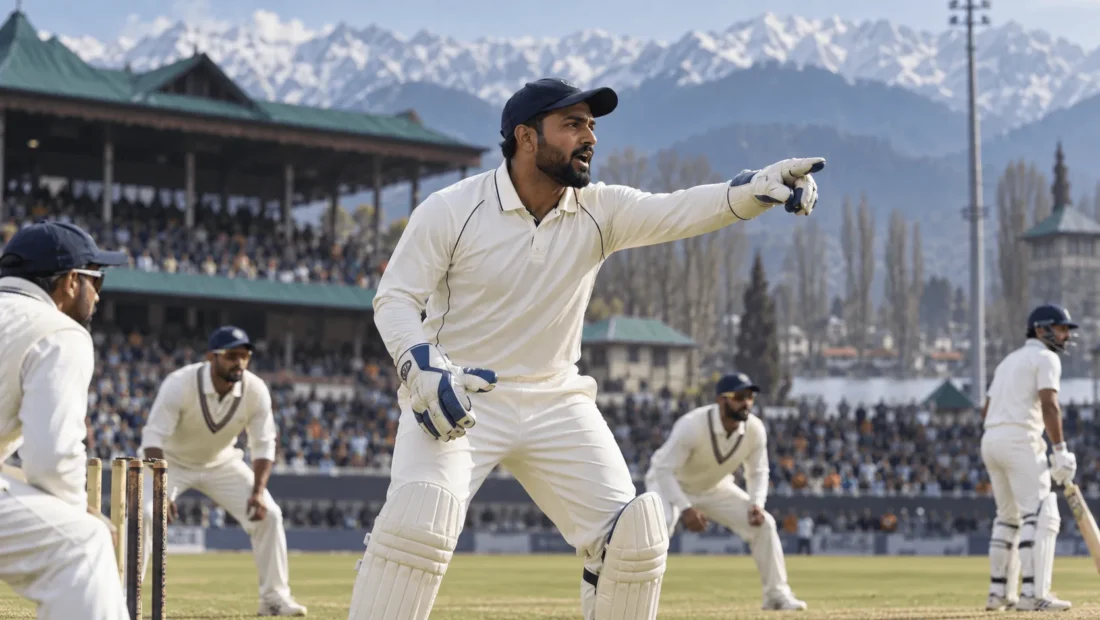
Rishabh Pant has been named captain of Rest of India for the Irani Cup match against 2025-26 Ranji Trophy champions Jammu and Kashmir, beginning October 1 in Srinagar. Sarfaraz Khan will serve as vice-captain, while fast bowler Akash Deep has been included subject to fitness. The squad also rewards the previous Ranji season’s leading run-scorers, giving the match a strong domestic-performance theme alongside its established international names.
Pant gets the captaincy for the Srinagar fixture
Rishabh Pant will lead Rest of India against Jammu and Kashmir in the Irani Cup match beginning October 1 in Srinagar. The appointment places one of India’s most established wicketkeeper-batters at the centre of a side built largely around players who performed strongly in the previous Ranji Trophy season. Sarfaraz Khan has been named vice-captain, giving the team another experienced middle-order option and a player familiar with the demands of domestic red-ball cricket. The match brings together the Ranji Trophy champions and a Rest of India group selected from leading performers elsewhere in the competition.
Pant is also listed as a wicketkeeper in the 15-member squad, although Aryan Juyal has been included as another keeping option. That gives the team flexibility around workload and balance. The captaincy itself is significant because the Irani Cup is often a useful bridge between domestic performance and higher-level selection conversations. In this squad, Pant and Sarfaraz provide an international core while a number of players who piled up runs in the Ranji Trophy get a chance to play in a higher-profile first-class fixture.
The opposition adds another layer. Jammu and Kashmir earned the right to play this match by winning the 2025-26 Ranji Trophy. Rest of India therefore arrive not as a ceremonial selection but as a side trying to challenge the domestic champions in their own region. Srinagar will host the match from October 1, making selection balance, fitness and adaptability important themes before the first ball is bowled.
Akash Deep included subject to fitness
Fast bowler Akash Deep is part of the Rest of India squad but his availability is conditional on fitness. He has not played a competitive match since February, when he represented Bengal in the Ranji Trophy semi-final. A lower-back stress injury then kept him out of IPL 2026 and the games that followed for India. His inclusion suggests the selectors still see him as an important red-ball option, but the asterisk next to his name is a reminder that the final bowling attack may depend on how he progresses before the match.
If fit, Akash Deep would add international-level pace experience to a group that already includes Mukesh Kumar and Mukesh Choudhary. Those two are expected to lead the seam attack. The selectors have therefore built a pace group with both experience and variety rather than relying entirely on the season’s leading domestic wicket-takers. That balance becomes especially useful in a one-off first-class match where conditions can change over four or five days and a team may need different types of bowling spells.
The fitness question also affects the rest of the XI. With only one match to plan for, Rest of India do not need the same kind of rotation strategy as a multi-game series, but they do need a side that can sustain long spells if Jammu and Kashmir bat deep. If Akash Deep is unavailable, the importance of Mukesh Kumar and Mukesh Choudhary rises immediately, while the team may also lean more heavily on the spin combination of Manav Suthar and Saransh Jain.
Ranji run-scorers rewarded
One of the clearest themes in the squad is the reward for sustained Ranji Trophy batting. The top four run-scorers from the previous season have all been selected: R Smaran scored 950 runs, Ayush Doseja 949, Sanat Sangwan 828 and Sudip Kumar Gharami 797. Their inclusion gives the squad a strong domestic-performance base and ensures the Irani Cup remains connected to what players achieved over the full first-class season rather than being built only around established names.
Those numbers also create competition for places. Pant and Sarfaraz are obvious senior figures, but the selectors have not simply filled the remaining batting slots with reputation. Smaran, Doseja, Sangwan and Gharami all arrive after substantial seasons. Shikhar Mohan, Aryan Pandey and Anukul Roy add further options. That depth means the final XI can be shaped around role and conditions, while still preserving the central idea that domestic form has been rewarded.
For the players involved, the Irani Cup is a different test from accumulating runs across a long league campaign. It is one high-profile match against the champions, and individual opportunities can be limited. A batter may have only one innings to make an impression if the match moves quickly. That puts extra value on the confidence created by a strong Ranji season. Rather than arriving as fringe names, the leading scorers come in having already demonstrated consistency over a much larger sample of first-class cricket.
Spin options give Rest of India another route
Manav Suthar and Saransh Jain are the main spin options in the squad. Their selection provides a natural counterweight to the seam group and gives Pant a way to change the pace of the innings if the surface begins to help slower bowling. In a first-class match, that flexibility matters because the role of spin can grow substantially as the pitch wears. Even when the surface is not turning sharply, two capable spinners can control scoring, create pressure and reduce the load on the fast bowlers.
Anukul Roy adds another all-round option and further depth to the squad. The precise combination will depend on the conditions in Srinagar and on Akash Deep’s fitness, but Rest of India have enough variety to avoid being locked into one plan. A seam-heavy XI is possible, as is a more balanced attack with two frontline spinners. The wicketkeeping decision can also influence batting depth depending on whether Pant keeps or the team uses Aryan Juyal in that role.
This is one reason the squad feels more like a genuine match group than a simple list of leading performers. There are multiple ways to build the XI. The selectors have covered opening and middle-order batting, wicketkeeping, seam, spin and all-round depth. The key task for Pant and the team management will be deciding which combination best fits the surface and the opposition rather than trying to include every notable name at once.
The full Rest of India squad
The 15-member group is led by Rishabh Pant, with Sarfaraz Khan as vice-captain. Sanat Sangwan, Shikhar Mohan, Sudip Kumar Gharami, R Smaran and Ayush Doseja provide much of the specialist batting depth. Aryan Juyal offers a second wicketkeeping option, while Aryan Pandey and Anukul Roy broaden the squad further. In the bowling group, Manav Suthar and Saransh Jain are the principal spinners, and Mukesh Kumar, Mukesh Choudhary and Akash Deep make up the main pace resources.
Akash Deep remains the one clearly conditional selection because of the lower-back stress injury that has kept him out since February. His status will be watched closely in the lead-up to October 1. The rest of the squad gives Pant enough flexibility to absorb a late change, but a fit Akash Deep would add another experienced pace option and make the selection debate more competitive.
Rest of India squad: Rishabh Pant (captain, wicketkeeper), Sanat Sangwan, Shikhar Mohan, Sudip Gharami, Sarfaraz Khan (vice-captain), R Smaran, Manav Suthar, Saransh Jain, Akash Deep (subject to fitness), Mukesh Kumar, Mukesh Choudhary, Aryan Juyal (wicketkeeper), Aryan Pandey, Anukul Roy and Ayush Doseja.
Why the Irani Cup selection matters
This squad arrives at a useful moment for Indian domestic cricket because it connects three different groups of players. There are established international names such as Pant and Sarfaraz, a returning bowler in Akash Deep, and a cluster of domestic batters whose selection is a direct consequence of strong Ranji Trophy numbers. That makes the match relevant beyond the trophy itself. It provides a common stage on which current India players, returning players and emerging first-class performers can be judged in the same contest.
The selection also shows that the previous Ranji season has been taken seriously. Naming the top four run-scorers in the squad sends a straightforward message about the value of first-class output. It does not guarantee any of them a place in a future India squad, and the source does not make that claim, but it does give them a higher-profile opportunity after sustained domestic success. In a system with many competing formats, that link between Ranji performance and representative selection remains important.
For Jammu and Kashmir, the match is the reward for winning the Ranji Trophy. For Rest of India, it is a test of whether a carefully assembled side can immediately function as a unit. Pant’s captaincy, Sarfaraz’s deputy role, Akash Deep’s fitness and the battle for batting places will all shape the build-up. Once the match starts, the wider selection story will give way to the more basic first-class task of putting together long innings and taking twenty wickets.
The useful way to read this development is to separate the headline from the details underneath it. The source material gives a clear set of dates, names, figures and selection or regulatory facts, and those details matter more than broad assumptions. Looking at them together shows how the story developed step by step rather than as a single isolated announcement.