
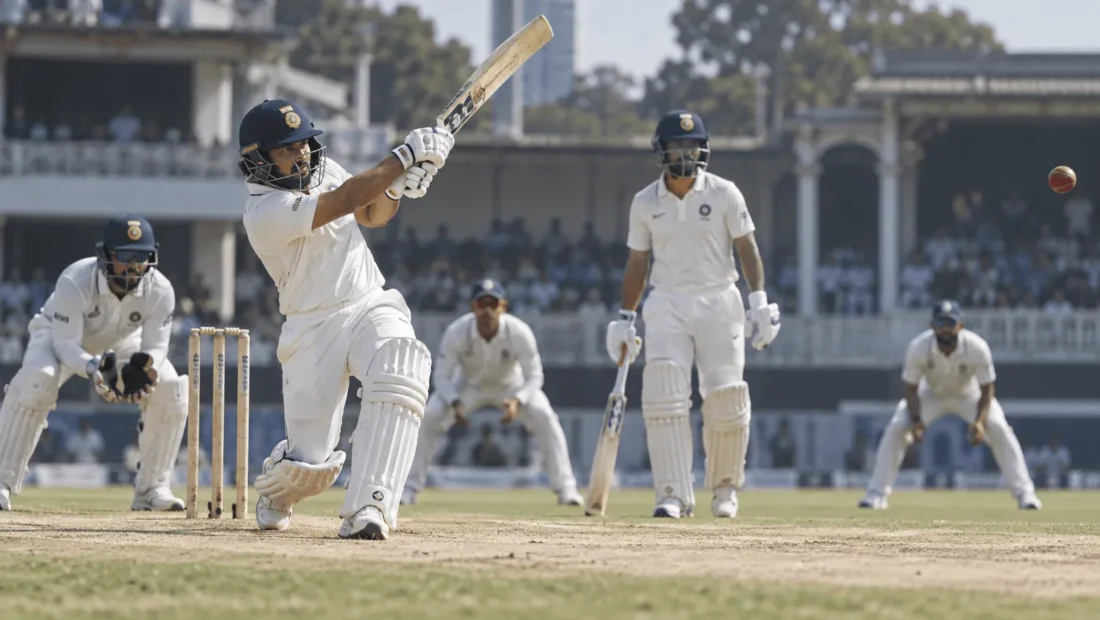
England’s pace attack ripped through Pakistan for 133 in the first innings of the third and final Test at Edgbaston, with Josh Tongue, Ollie Robinson and Jofra Archer sharing all 10 wickets. Tongue finished with 4 for 42, while Robinson and Archer claimed three each.
Pakistan were already in serious trouble before lunch, reaching the interval at 100 for 7. Robinson struck with the third ball after the break, Tongue removed Saud Shakeel for 43, and Archer ended the innings when Mohammad Abbas edged to second slip. The last-wicket partnership of 26 between Abbas and Mohammad Ali was Pakistan’s best stand of the innings.
That number captured how difficult the innings had been. The 26-run tenth-wicket stand was larger than the combined 20 runs produced by Pakistan’s opening partnerships across five innings in the series. By the time the final wicket fell, England’s bowlers had turned the first day into another test of Pakistan’s fragile batting.
Robinson Sets the Tone
Robinson’s spell combined control with early breakthroughs. His 3 for 15 came at an economy rate of 1.36, continuing the frugal bowling that has marked his summer. Pakistan struggled not only to survive but to score freely enough to shift pressure back onto the bowlers.
Saim Ayub survived an lbw decision from the fifth ball of the match when a review showed Robinson’s delivery would have gone over the stumps. The reprieve was brief. In Robinson’s next over, Ayub was given lbw again, this time correctly, and the wicket brought Robinson his 100th in Test cricket.
Robinson later had Abdullah Shafique caught low by Dan Lawrence in the slips. By keeping the ball around a testing line and giving little away, he created the conditions for Tongue and Archer to attack from the other end.
Pakistan Lose Five Before Reaching 50
The tourists’ start was disastrous. Before the first of Pakistan’s three debutants reached the crease, five wickets had fallen with only 48 runs on the board in the 15th over. Captain Babar Azam was already back in the dressing room by that stage.
Azan Awais received an early life when Ben Duckett dropped him at first slip off Archer. The reprieve lasted only three balls because Tongue held a straightforward chance at midwicket when Awais chipped the next opportunity into the field.
Shafique then fell to Robinson, and Shan Masood followed in the next over when he top-edged a pull from Archer to substitute fielder Theo Wylie at midwicket. Pakistan were 26 for 4 and needed Babar to stabilize the innings, but Tongue produced an excellent delivery from a good length that seamed in and knocked back off stump. Babar made only 7.
Tongue Attacks the Stumps
Tongue’s four wickets gave England the most destructive figures of the innings. His dismissal of Babar was one of the most important because it removed Pakistan’s most experienced top-order batter before he could rebuild.
He also accounted for wicketkeeper Ghazi Ghori. The debutant began confidently, cutting his first ball in Test cricket for four. He survived an England lbw review two deliveries later, but Tongue pinned him on the back leg soon after. The original decision was upheld on review.
Another debutant, Mohammad Imran Randhawa, was bowled by a Tongue yorker. Later, Tongue broke Pakistan’s main resistance by sending a delivery through Shakeel’s gate and into off stump. Shakeel’s 43 from 47 balls was the only score from a recognized Pakistan batter that offered sustained resistance.
Shakeel Tries to Counterattack
Shakeel had been given a chance on 7 when Duckett put down an overhead opportunity in the cordon. He responded by taking two boundaries in three balls from Gus Atkinson, one through the covers and another behind point.
His approach was noticeably more positive than much of Pakistan’s batting around him. With wickets falling regularly, there was little value in simply occupying the crease if the score stopped moving. Shakeel tried to make England pay whenever the bowlers offered width.
The innings ended when Tongue found seam movement through the gate. At 43, Shakeel had made almost one third of Pakistan’s eventual total. Once he was gone, the lower order was left trying to drag the score toward something more competitive.
Debutants Face a Brutal Introduction
Pakistan’s selection had been reshaped by off-field turmoil and the heavy defeat at Lord’s, with four changes and three debutants in the side. That made the early collapse especially difficult because inexperienced players were exposed almost immediately to an England attack already in rhythm.
Ghori at least began with a boundary, while Razaullah showed aggression later in the innings. He pulled Tongue through midwicket and collected another four from an outside edge over cover. The shots were not always controlled, but they gave Pakistan brief momentum.
Razaullah’s stay ended after lunch when Robinson found an outswinger. The debutant edged to slip, where Duckett held the chance after two earlier drops. The dismissal left Pakistan with even less support for the lower order.
Archer Cleans Up the Tail
Archer’s three wickets included Shan Masood and the final dismissal of the innings. He provided pace and a wicket-taking threat even when Pakistan’s last pair briefly frustrated England.
Abbas and Mohammad Ali added 26 for the tenth wicket, comfortably the best partnership of Pakistan’s innings. In another context, a 26-run stand would be modest. Here it stood out because no earlier pair had managed to establish a meaningful base.
The resistance ended when Abbas pushed loosely and edged Archer to second slip. Pakistan were all out for 133, leaving England with the opportunity to take control before their own batters had faced a ball.
The Opening Partnership Problem Continues
One of the starkest statistics from the innings concerns Pakistan’s openers. The 26 runs added by the tenth wicket were more than the 20 runs produced by Pakistan’s opening partnerships across five innings in the series.
That comparison does not explain every batting problem, but it shows how often the middle order has been asked to respond to early damage. When the top of the order repeatedly fails to establish a platform, players such as Babar and Shakeel have to begin their innings under immediate scoreboard pressure.
At Edgbaston, the pattern was extreme. Pakistan lost early wickets so quickly that even a single rebuilding partnership could have changed the tone. Instead, only Shakeel and the last pair managed to provide meaningful resistance.
England’s Three Quick Bowlers Share the Work
The wicket distribution was almost perfectly balanced. Tongue took four, Robinson three and Archer three. No spinner was needed to finish the innings, and the fast bowlers were able to attack with different methods.
Robinson supplied control and movement, Tongue repeatedly threatened the stumps, and Archer offered pace plus the ability to finish partnerships. The combination meant Pakistan had no obvious period in which the pressure eased.
Robinson’s economy rate of 1.36 was especially restrictive. Even when a wicket did not fall, Pakistan were not collecting enough easy runs to change England’s lengths. The result was an innings that remained under pressure from the opening overs until the final edge.
A First-Innings Total That Leaves Pakistan Exposed
A total of 133 gives Pakistan very little margin in the match. The source stops at the innings break, so England’s response is not yet part of the picture, but the first-innings situation strongly favors the home side.
Pakistan’s only substantial individual score was Shakeel’s 43. The next most productive stand came from the final pair. That combination usually indicates a batting innings that never established a stable phase.
For England, the job was completed with ruthless efficiency. Tongue, Robinson and Archer turned an unsettled Pakistan lineup into a series of short stays at the crease and ensured the third Test began with the tourists immediately on the defensive.
What the Result Means From Here
The damage was comprehensive from the first session, and Pakistan never found a sustained passage in which to reset the innings.
Pakistan’s selection changes made the collapse even harder to absorb because several players were learning Test cricket in the middle of a crisis. Ghori and Razaullah showed brief attacking intent, but neither could turn a promising moment into a stabilizing partnership. Against an England attack that kept changing angle, pace and length without releasing pressure, those short cameos were not enough to prevent another low first-innings total.
Pakistan’s 133 also leaves little room for the kind of recovery that can sometimes follow an early collapse. The tourists needed either a major top-order innings or a substantial lower-order stand to move the total toward a more defensible range. Shakeel supplied the only meaningful specialist-batter resistance, and the best partnership arrived only when the tenth wicket was at the crease.
England, by contrast, can take confidence from the way the workload was shared. Tongue led with four wickets, Robinson reached the 100-Test-wicket landmark during an exceptionally economical spell, and Archer finished the innings with three. No single bowler had to carry the attack, which allowed England to maintain pressure from both ends through the session.
The next phase of the Test will depend on England’s first innings, which falls outside the supplied report. What the opening innings has already established is the scale of Pakistan’s problem. Their top order was exposed early, Babar was removed for 7, and a total of 133 gives the bowlers almost no cushion. England’s quicks could hardly have provided a stronger start to the final Test.