
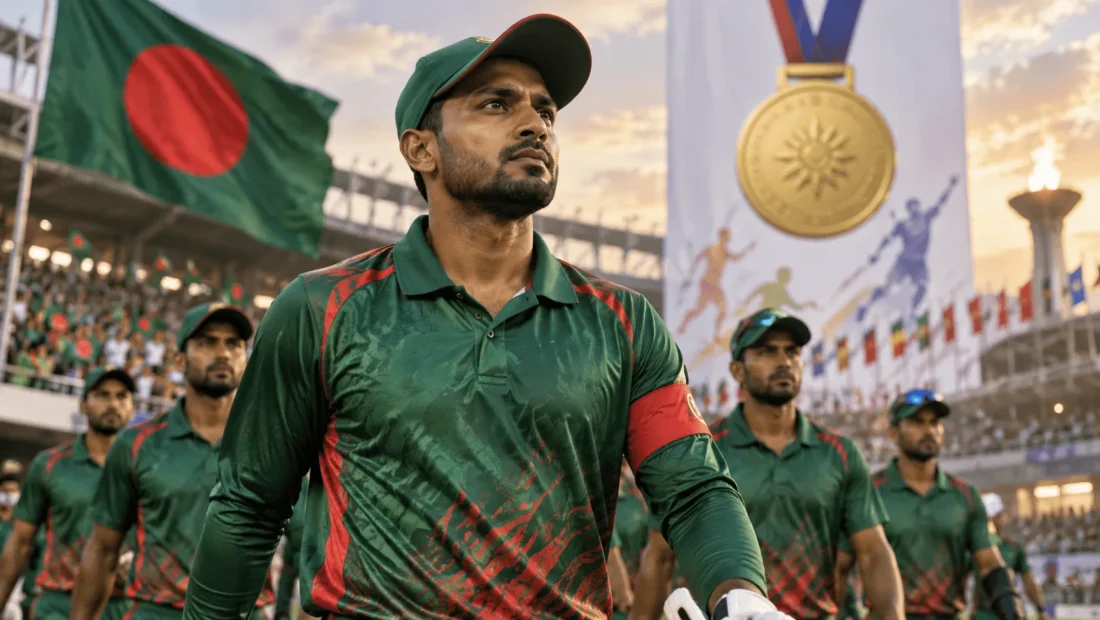
Litton Das has spent years playing international cricket, but the 2026 Asian Games will give him an experience he has never had before. The Bangladesh captain is set to lead a squad he describes as eager and excited, with the team openly targeting a gold medal. For Litton, the tournament stands apart from the bilateral series and franchise competitions that normally fill the calendar because the Asian Games place cricket inside a much wider multi-sport event.
A first Asian Games for an experienced Bangladesh captain
Bangladesh have a strong piece of history to chase. The men’s team won the Asian Games cricket competition in Guangzhou in 2010, which remains the country’s only gold medal at the Games. They later added bronze medals in 2014 and 2023. Bangladesh’s women have also contributed to the country’s cricket record at the event with two silver medals and one bronze. That history gives the 2026 men’s side a clear benchmark: they are not entering a competition where Bangladesh have never succeeded before.
Litton and many of the country’s frontline players missed the previous Asian Games because the 2023 event clashed with the 50-over World Cup. This time he will experience the Games directly, and he has described that rarity as part of the motivation. International cricketers are used to representing their country, but they do not often do so inside an event where athletes from many sports share the same wider stage.
Bangladesh at the Asian Games
| Edition / context | Result or note |
| 2010 Guangzhou | Men won gold – Bangladesh’s only Asian Games gold medal |
| 2014 | Men won bronze |
| 2023 | Men won bronze; frontline stars including Litton missed the event because of the ODI World Cup clash |
| 2026 preparation | Three T20I wins from eight completed matches; most recent series was a 2-1 win over Zimbabwe |
| Squad change | Mohammad Saifuddin ruled out; Aliss Al Islam called up for the first time |
Litton has been clear that Bangladesh are not travelling simply to enjoy the occasion. He says the team always targets trophies, but the specific dream this time is a gold medal. His comments reflect both ambition and awareness of the event’s importance. Players are excited because the opportunity does not come every year, and a strong result would add to Bangladesh’s limited collection of Asian Games gold medals.
That target also creates pressure. Litton accepts that the team will face challenges, but his emphasis is on contributing for the country and reaching the final. A place in the gold-medal match would guarantee Bangladesh a medal and give them the opportunity to repeat the 2010 success. The captain’s language suggests the squad is treating the event as a serious competitive objective rather than an exhibition around a larger Games programme.
The tournament also has symbolic value because cricket is moving toward the Olympic stage in 2028. Litton says Bangladesh want to leave a mark at the Asian Games so the players understand what will be required at Olympic level. The Asian Games do not automatically determine Olympic qualification in the way his wording might appear to suggest in isolation; the source presents his comment as an ambition and learning opportunity. The practical point is that the multi-sport environment can give the squad experience beyond a normal cricket tour.
Bangladesh arrive with limited T20I rhythm
The major sporting concern is Bangladesh’s recent T20I schedule and results. They have completed eight T20Is in 2026 and won three, across bilateral series against New Zealand, Australia and Zimbabwe. Their most recent assignment was the July series against Zimbabwe, which Bangladesh won 2-1. Since then, the team have had a gap from international T20 cricket before the Asian Games.
That lack of recent match volume is the clearest competitive question identified in the source. T20 tournaments can move quickly, and teams often need to find combinations immediately. Bangladesh do not have a long run of recent internationals to build from. Instead, they have relied on a training camp in Dhaka and two practice matches as part of their preparation.
Litton believes that preparation can be helped by the growing number of Bangladesh players appearing in franchise T20 leagues. His argument is not that franchise cricket replaces international matches. Rather, more players exposed to different leagues can bring experience back into the national setup. He points to earlier periods when Shakib Al Hasan and Mustafizur Rahman were the main Bangladeshi names visible on the franchise circuit and says opportunities expand when more players are involved.
Franchise experience is becoming a bigger part of the picture
Litton’s comments on franchise cricket are important because they connect individual opportunities with the wider national team. A player who competes in different T20 environments may face unfamiliar opponents, tactical approaches and pressure situations. The source does not quantify how much this will help Bangladesh at the Asian Games, but the captain clearly sees broader franchise participation as positive for the country’s overall game.
The logic is cumulative. When only one or two players gain that exposure, the benefit is concentrated. When more players travel and compete, a larger part of the national squad can bring those experiences into camps and team meetings. Litton’s point is that visibility can also create further opportunities: one player’s success can make it easier for others from the same country to be noticed.
For the Asian Games squad, that experience has to be combined with the work done in Dhaka. Practice matches can help the team rehearse roles, but tournament pressure will be different. Bangladesh’s recent international record shows why the captain is not treating preparation casually. Three wins from eight completed T20Is is not dominant form, even though the most recent bilateral series ended in victory.
The lower-middle order remains under review
Bangladesh are also using this period to look at options in the lower-middle order. Litton specifically mentions Yasir Ali, known as Rabbi, who has returned to the side after performing well in Zimbabwe. The captain says the team want to give him time to establish himself while continuing to assess the other available batters.
The wording is deliberately open. Bangladesh have three or four options for the lower-middle-order positions, and Litton says selection will depend on which batter is most suitable. That suggests the role has not been permanently assigned. The Asian Games therefore provide both a medal opportunity and another stage on which the team can evaluate how different players fit into the T20 batting order.
Lower-middle-order roles are often difficult to judge from raw totals alone because players may face a small number of balls or enter in changing match situations. The source does not provide detailed comparisons between Bangladesh’s candidates, so the relevant news point is that Yasir is back in contention and will receive a meaningful opportunity rather than being treated as a temporary cover option.
Saifuddin ruled out, Aliss Al Islam receives maiden call-up
Bangladesh have already had to make one forced change. Allrounder Mohammad Saifuddin has been ruled out of the Asian Games because of a hamstring injury. In his place, Bangladesh have called up 29-year-old mystery spinner Aliss Al Islam, giving him his first T20I selection.
The change alters the balance of the squad because an allrounder and a specialist mystery spinner do not offer the same skill set. The source does not explain how Bangladesh will compensate tactically, so any detailed prediction would go beyond the available information. What is confirmed is that Saifuddin will miss the event and Aliss has received a maiden call-up at a significant multi-team tournament.
For Aliss, the timing makes the selection especially notable. He is not entering the squad through a long-planned progression described in the source; he has been brought in because of an injury replacement. That can create an unexpected opportunity. Whether he plays and how Bangladesh use him will depend on team selection once the tournament begins.
The wider Games experience matters to Litton
One of the more personal parts of Litton’s comments concerns the chance to interact with athletes from other sports. He spent time at BKSP, Bangladesh’s national sports institute, and says he has always been interested in watching different disciplines. If the schedule allows, he wants the cricket team to follow other events and learn from athletes representing different countries.
That is a different form of preparation from nets or tactical meetings. Multi-sport events place competitors from very different disciplines in the same environment. Training methods, routines and approaches to pressure vary widely, and Litton sees value in simply observing how elite athletes from other sports conduct themselves.
The captain’s interest also reinforces why he calls the Asian Games a rare occurrence. A normal international cricket series keeps the team inside the familiar structure of hotels, training, matches and recovery. The Asian Games create a broader sporting context. Bangladesh still have a cricket tournament to win, but the players are also part of a national delegation competing across many sports.
A tournament that carries both immediate and long-term meaning
Bangladesh’s immediate objective is simple: reach the final and compete for gold. The historical target is equally clear because the country’s only Asian Games gold came from men’s cricket in 2010. Litton’s team therefore have an opportunity to add a second title in the same sport while also improving on the bronze medal won in 2023.
At the same time, the captain is thinking beyond one result. He links the Asian Games experience with cricket’s Olympic future, values the chance to learn from other athletes and wants more Bangladesh players to gain exposure in franchise leagues. Those themes all point in the same direction: the tournament is being treated as part of a wider development process, not only as a short medal campaign.
The uncertainty comes from form and preparation. Bangladesh have played relatively little T20I cricket in 2026, their results have been mixed, the lower-middle order is still being assessed and Saifuddin is unavailable. Those are real questions. But Litton’s public message is optimistic. The squad is eager, the captain is experiencing the Games for the first time, and the ambition is to turn a rare opportunity into the country’s second Asian Games gold medal.